IIM Ahmedabad, Applied Deep Learning and Generative AI for Managers, November 2026
We split by patient, so the test set is 50 people the model never sees
The NIH set has 27,558 single cells from Giemsa-stained thin smears of 201 patients. Most patients give both infected and uninfected cells, so a random split would put cells from one patient’s slide on both sides.
We locked 50 patients away first (dark dots), then took at most six cells per patient per class: 400 cells per class for training and 100 per class for the test, with near-duplicates removed.
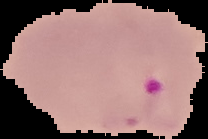
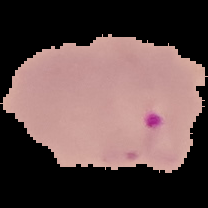

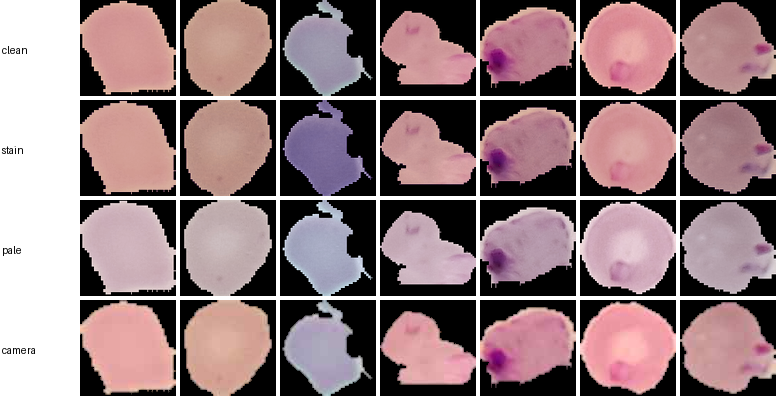
Every image, real or ChatGPT, goes through the same steps. We pad with black instead of cropping because the cells already sit on black and a crop can cut off a parasite at the edge.
151
training patients, 800 cells
50
test patients, 200 cells, locked
0
patients on both sides
Rajaraman et al. (2018), PeerJ 6:e4568. NLM Malaria Data, a U.S. Government work. Patient ids from NLM’s patient-to-cell mapping files.
ChatGPT saw five real cells at a time and drew sixteen new ones
20 + 20reference cells, training pool only
5rotated into each new chat
4 × 4 grids from Create image
tiles, each one inspected
400 + 400kept, 96 × 96
These are . Create one square image that is a 4 by 4 grid of 16 new, separate images in the same style, camera angle and colour as these references, but each different in content: slightly pinker tint, rounder cells, and a different cell size and texture in each image. Match the references closely: each cell fills almost its whole square, with pale natural colours and the soft, slightly blurry look of a real low-resolution microscope photo. Do not copy any reference image. Thin white lines between images. No text, labels or borders.
Both classes used this template. Only the class sentence changed, and grid k of each class got the same variation phrase. We threw out uninfected tiles that showed a parasite-like dot and near-duplicates. ChatGPT refused no prompt.
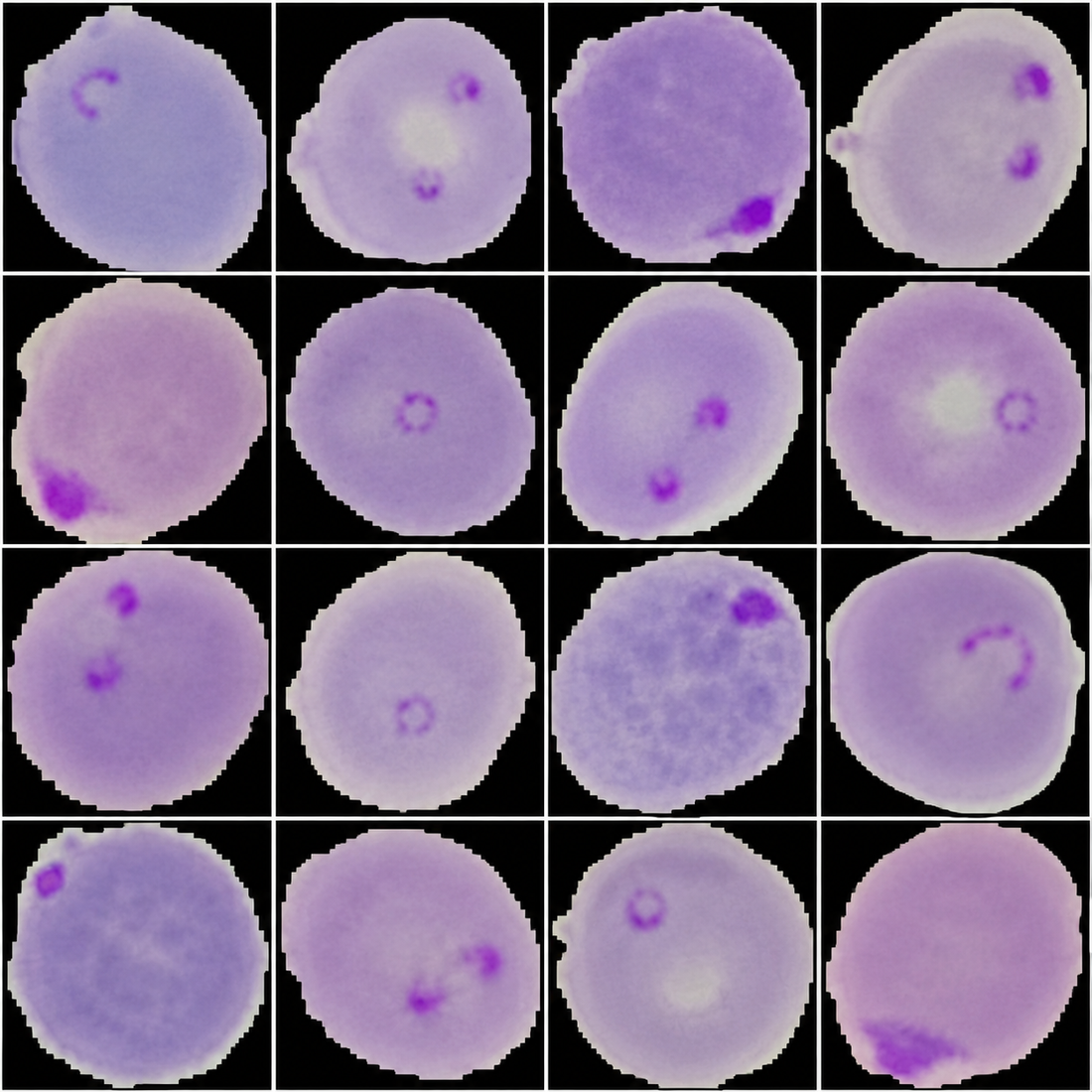
One untouched ChatGPT grid, parasitized class, 1254 × 1254 px.
All 55 prompts, the references each one used, conversation links and every discarded tile: docs/generation_log.md.
We trained a small classifier to separate our real training cells from the ChatGPT tiles, with five folds grouped by patient and by grid. It gets them right almost every time. The ChatGPT cells share a house style: a more lilac tint, cleaner edges and tidy rings.
We found no copies. Every tile is further from its nearest reference than real cells usually are from a cell of another patient.
spot-the-fake accuracy
FID real vs ChatGPT; two real halves give
tiles that look like a copy of a reference
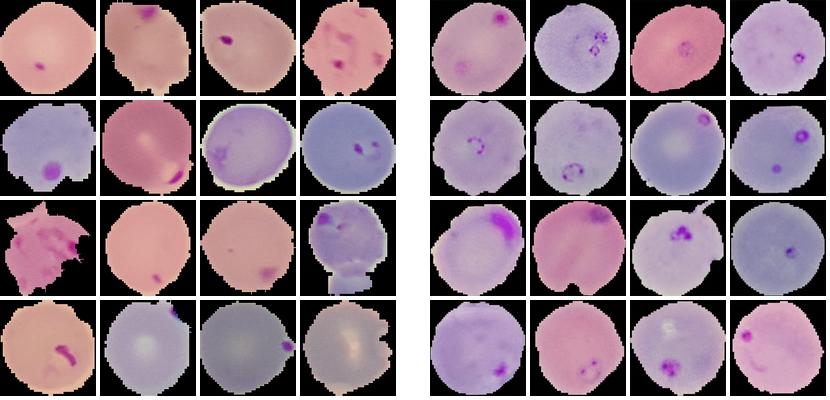

Spot-the-fake: ResNet-18, 5 epochs, 5-fold CV. FID: Inception-v3 pool features (torchmetrics). Copy check: cosine similarity of ImageNet ResNet-18 features.
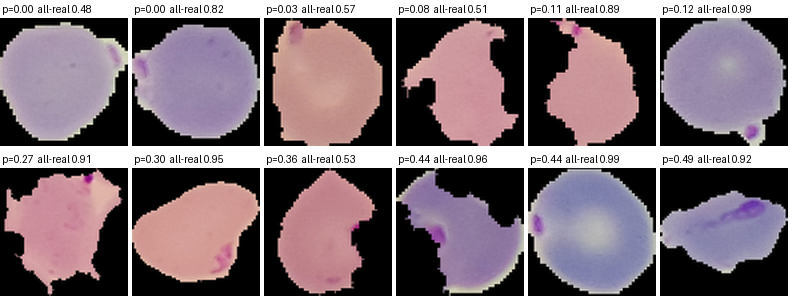
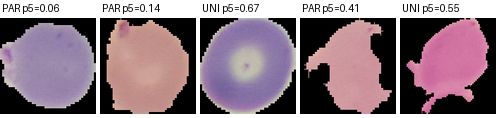
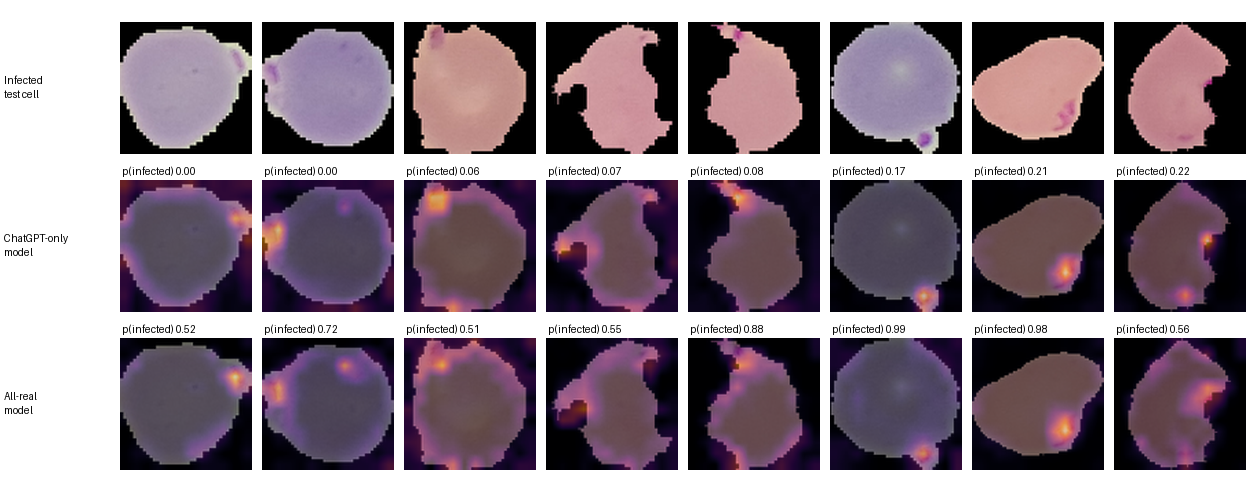
Grad-CAM on ResNet-18’s layer2 (12 × 12 grid), averaged over the 5 seeds of each model and laid over the 96 × 96 cell. Warmer means the region pushed the model towards “infected”.