IIM Ahmedabad, Applied Deep Learning and Generative AI for Managers, November 2026

How many real cells does a malaria model need?

real labelled cells
drawn by ChatGPT
fewer expert labels than all-real

Every training label costs a trained microscopist’s time

A thin-smear malaria test is read by eye. The microscopist moves across the smear field by field and looks at each red cell for the purple ring of a parasite. To teach a model the same first pass, someone with that training has to label thousands of cells, and in malaria regions those people are scarce.

ChatGPT can draw an infected cell in seconds. A malaria programme therefore has to decide how many real labelled cells it still needs to pay for.

Decision maker

The head of laboratory services for a national malaria programme, deciding how many expert-labelled cells to commission before building a screening aid.

0 cells read0 infected

A microscopist reads the smear in a zig-zag. Here the frame walks over real NIH cells.

Brief: Applied Deep Learning and Generative AI for Managers, IIM Ahmedabad. The decision framing is ours.

We split by patient, so the test set is 50 people the model never sees

The NIH set has 27,558 single cells from Giemsa-stained thin smears of 201 patients. Most patients give both infected and uninfected cells, so a random split would put cells from one patient’s slide on both sides.

We locked 50 patients away first (dark dots), then took at most six cells per patient per class: 400 cells per class for training and 100 per class for the test, with near-duplicates removed.
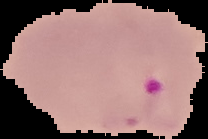
An original cell image
original,
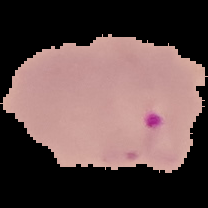
The same cell padded to a square with black
padded square
The cell resized to 96 by 96 pixels
96 × 96 PNG

Every image, real or ChatGPT, goes through the same steps. We pad with black instead of cropping because the cells already sit on black and a crop can cut off a parasite at the edge.

151
training patients, 800 cells
50
test patients, 200 cells, locked
0
patients on both sides

Rajaraman et al. (2018), PeerJ 6:e4568. NLM Malaria Data, a U.S. Government work. Patient ids from NLM’s patient-to-cell mapping files.

ChatGPT saw five real cells at a time and drew sixteen new ones

20 + 20reference cells, training pool only
5rotated into each new chat
4 × 4 grids from Create image
tiles, each one inspected
400 + 400kept, 96 × 96
These are . Create one square image that is a 4 by 4 grid of 16 new, separate images in the same style, camera angle and colour as these references, but each different in content: slightly pinker tint, rounder cells, and a different cell size and texture in each image. Match the references closely: each cell fills almost its whole square, with pale natural colours and the soft, slightly blurry look of a real low-resolution microscope photo. Do not copy any reference image. Thin white lines between images. No text, labels or borders.

Both classes used this template. Only the class sentence changed, and grid k of each class got the same variation phrase. We threw out uninfected tiles that showed a parasite-like dot and near-duplicates. ChatGPT refused no prompt.
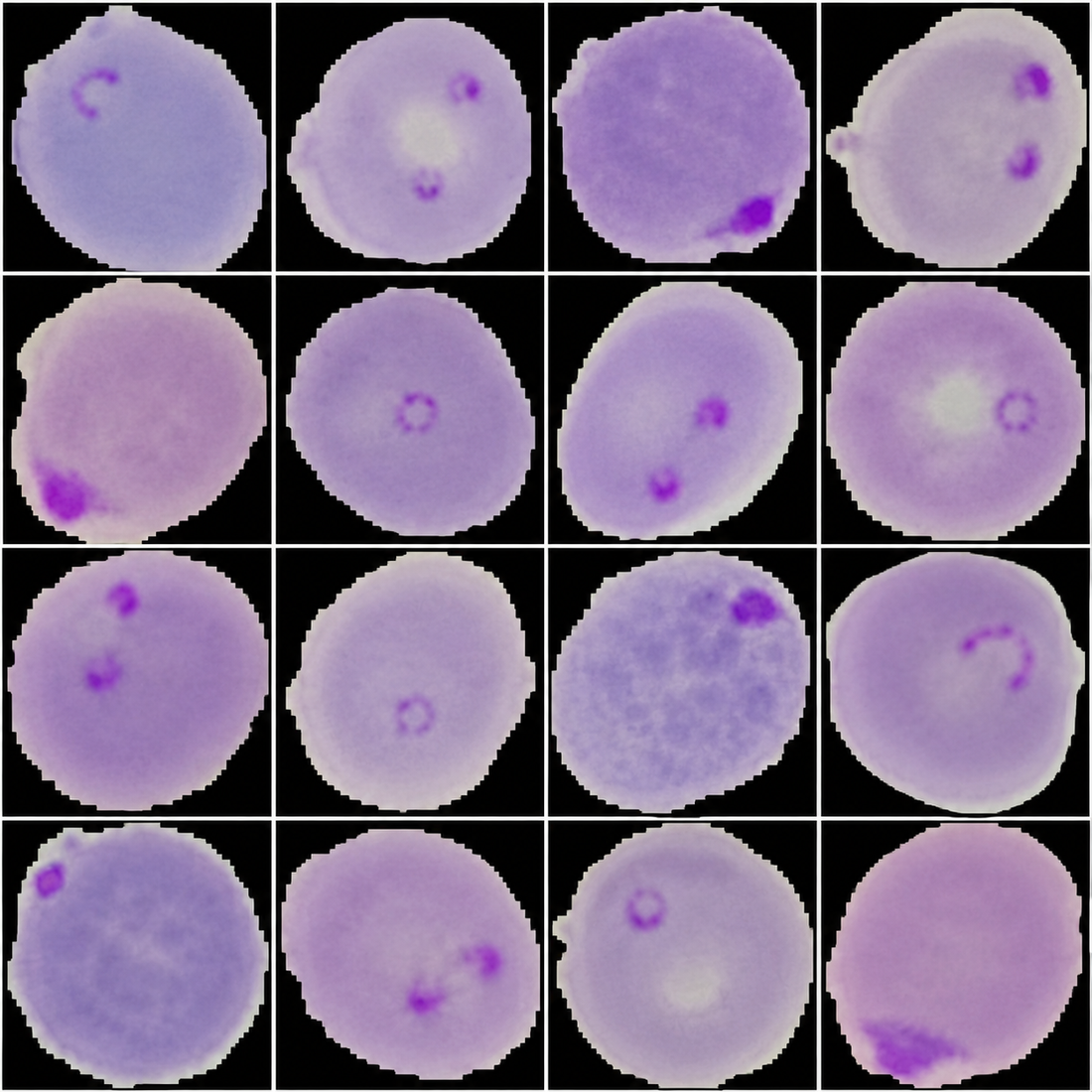
A raw 4 by 4 grid of infected red blood cells generated by ChatGPT

One untouched ChatGPT grid, parasitized class, 1254 × 1254 px.

All 55 prompts, the references each one used, conversation links and every discarded tile: docs/generation_log.md.

Spot the fake. Tap every cell you think ChatGPT drew

Eight of these are real cells from the training pool and eight came from ChatGPT. Half of each group are infected. Pick yours, then reveal.

The machine’s score

We trained a small classifier to separate our real training cells from the ChatGPT tiles, with five folds grouped by patient and by grid. It gets them right almost every time. The ChatGPT cells share a house style: a more lilac tint, cleaner edges and tidy rings.

We found no copies. Every tile is further from its nearest reference than real cells usually are from a cell of another patient.

spot-the-fake accuracy
FID real vs ChatGPT; two real halves give
tiles that look like a copy of a reference
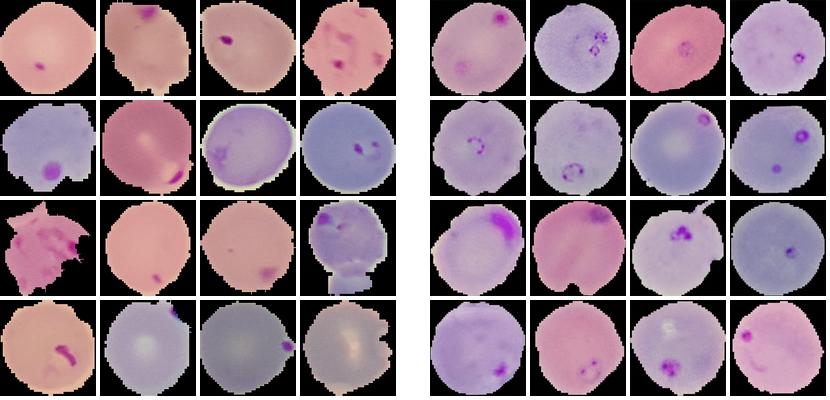
Sixteen real parasitized cells beside sixteen ChatGPT cells
Parasitized. Left, 16 real cells; right, 16 ChatGPT cells.
The six synthetic tiles most similar to a reference, each next to that reference
The six closest ChatGPT-to-reference pairs in the whole pool are still different cells.

Spot-the-fake: ResNet-18, 5 epochs, 5-fold CV. FID: Inception-v3 pool features (torchmetrics). Copy check: cosine similarity of ImageNet ResNet-18 features.
Fifty models, and the only thing that changes is the share of real cells

Every model trains on exactly 800 cells, half of them infected. We step the mix from all ChatGPT to all real in ten steps and train each step with five random seeds.

Nested draws

Within a seed, the 8 real cells of the 1% model sit inside the 16 of the 2% model, and so on up to all 800. Any gain therefore comes from the extra real cells; the ones already there stay the same. Each seed draws a fresh nest.

RecipeImageNet ResNet-18, AdamW, 10 fixed epochs, no early stopping
Augmentationflips and 90° turns, identical for every run
ScoringAUC on the 200 locked test cells, once per model
Tolerance0.01 AUC, fixed before any of the 50 runs
10 real cells10 ChatGPT cellsone training run (seed)

Each column is one training set of 800 cells. The five squares under it are the five seeds: 10 mixes × 5 seeds = 50 models, every one scored on the same 200 real test cells.

Small dots: the five seeds. Line: their mean. Dashed line: the bar, the all-real baseline minus the 0.01 tolerance.

Seeds

Tolerance

All ChatGPT

results/results.csv holds all 50 runs; results/mix_table.csv holds this table.

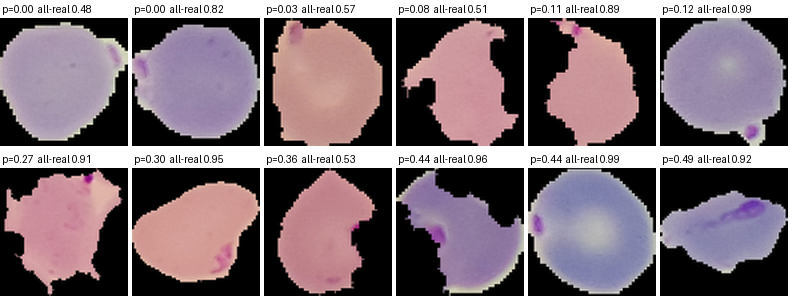
Infected test cells the ChatGPT-only model calls uninfected
Every infected test cell the ChatGPT-only model calls uninfected (seed-averaged). p is its probability of infection; all-real is the same cell scored by the 800-real model.

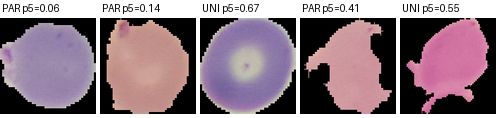
The five test cells the 5%-real model gets wrong and the all-real model gets right
The brief’s check: the cells the 5%-real model gets wrong and the all-real model gets right. PAR is truly parasitized, UNI truly uninfected; p5 is the 5% model’s probability of infection.

To the head of laboratory services

Real cells needed = 800 × r* plus the 40 reference cells shown to ChatGPT. Labels avoided = 800 minus that.

What could make this number wrong

A different hospital, camera or stain

All the cells come from one hospital’s slides and one phone-on-microscope setup, and ChatGPT copied that look from our references. The next test is to score the same models on cells from another site, such as NLM’s other smear sets or a partner lab, before trusting r* anywhere else.

How much comes from ImageNet

Did ChatGPT copy its references?

Training on output of models trained on fakes

Our fakes came from real references. If the next generator learns from images like ours, its mistakes, such as the too-tidy rings, get copied again and the rare real cases drop out (Shumailov et al., Nature 2024). Every cycle needs fresh real labelled cells.

Everything here can be re-run from the project folder

reportreport/report.pdfthe written report
notebooknotebooks/project.ipynbend to end, outputs saved
resultsresults/results.csvone row per training run
logdocs/generation_log.mdevery prompt, reference and discarded tile
plandocs/milestone1.mdmetric and tolerance, fixed before the runs

How we chose the dataset

We piloted concrete cracks and dropped them because published models score about 99.9%, so the curve would be flat. We piloted paediatric chest X-rays and dropped them because ChatGPT’s X-rays were stylised and all alike. Malaria cells passed both checks: ChatGPT drew them well, and a real-only model scored 0.98 on held-out training patients, which left room to move.

AI use

The synthetic images come from ChatGPT Create image, as the brief requires. Code, analysis, this site and the report drafts were produced with Claude (Anthropic) under our direction. Every number on these pages is generated from the result files by scripts/10_build_site_data.py.

real labelled cells to collect
cells for ChatGPT to draw
fewer expert labels

Re-measure the break-even at every new site before trusting it there. Thank you.
